
01
Code Foundations
A playful, project-led introduction to computational thinking, logic and the confidence to create with code.
We are a non-profit organisation helping children, young people, adults, schools and communities build practical technology skills, media awareness and healthy digital habits.
const learner = "curious";let idea = "bold";function build(future) { learn(); create(); share(); return opportunity;}Welcoming entry points for people with different needs, abilities and levels of access.
Critical skills to assess information, recognise manipulation and communicate responsibly.
Safer passwords, privacy awareness, respectful online conduct and healthy technology habits.
Coding, creativity and enterprise skills connected to education, work and community resilience.
From foundational computer use and safe online participation to coding and digital enterprise, our programmes meet people where they are.
A playful, project-led introduction to computational thinking, logic and the confidence to create with code.
Design and build responsive websites while learning the tools and habits used by modern web creators.
Essential computer, internet, productivity and online-safety skills for confident participation in a digital world.
Practical habits for safer accounts, stronger privacy, respectful participation and a healthier relationship with technology.
Learn to question, verify and create responsible digital media in a fast-moving information environment.
A supported club model that brings consistent, hands-on coding activities directly into schools.
“We expand safe, inclusive and meaningful participation in Eswatini’s digital society.”
Programmes designed for diverse ages, backgrounds, abilities and communities.
Practical digital hygiene, privacy, media awareness and responsible participation.
The confidence to learn, create, make informed choices and pursue opportunity.
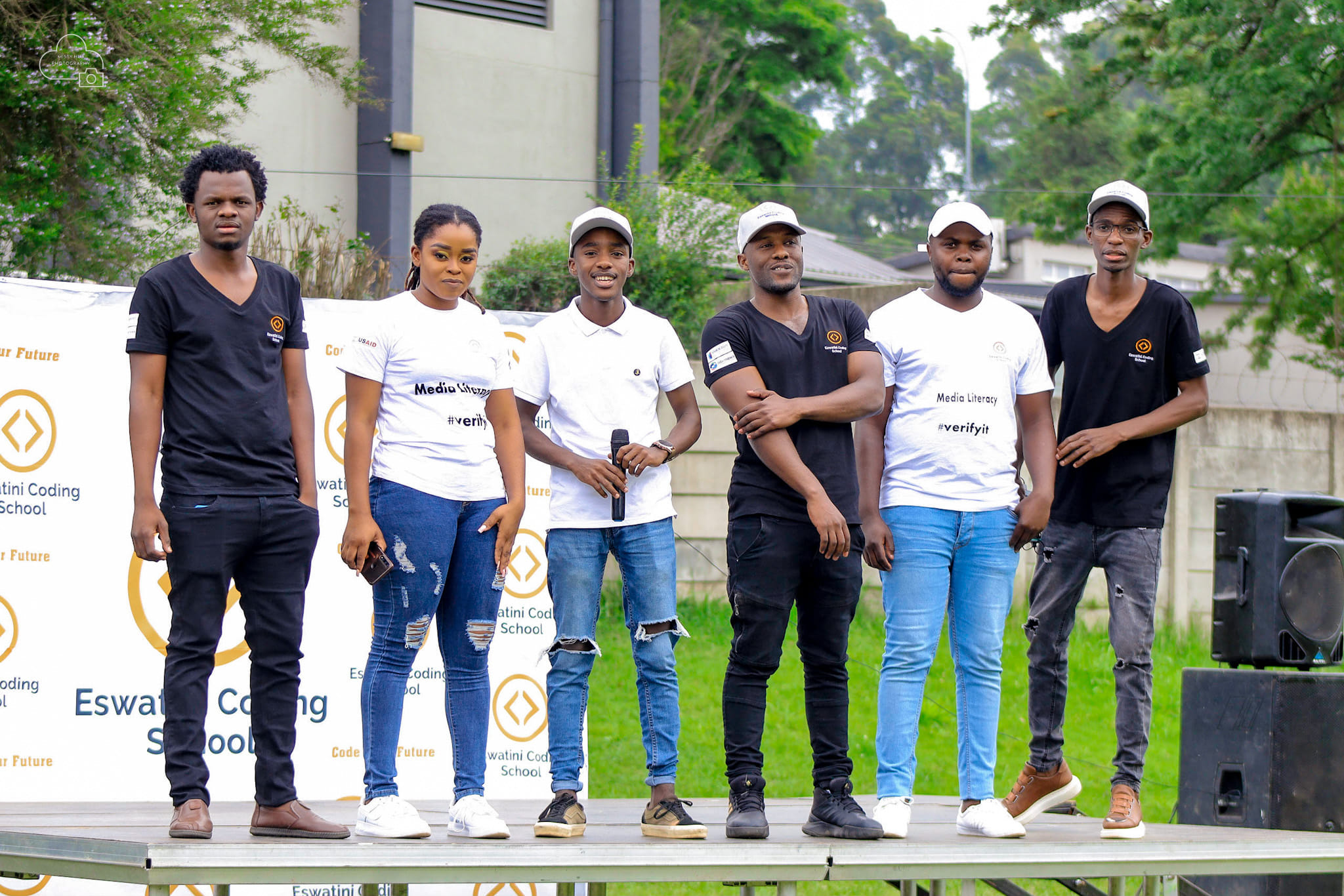
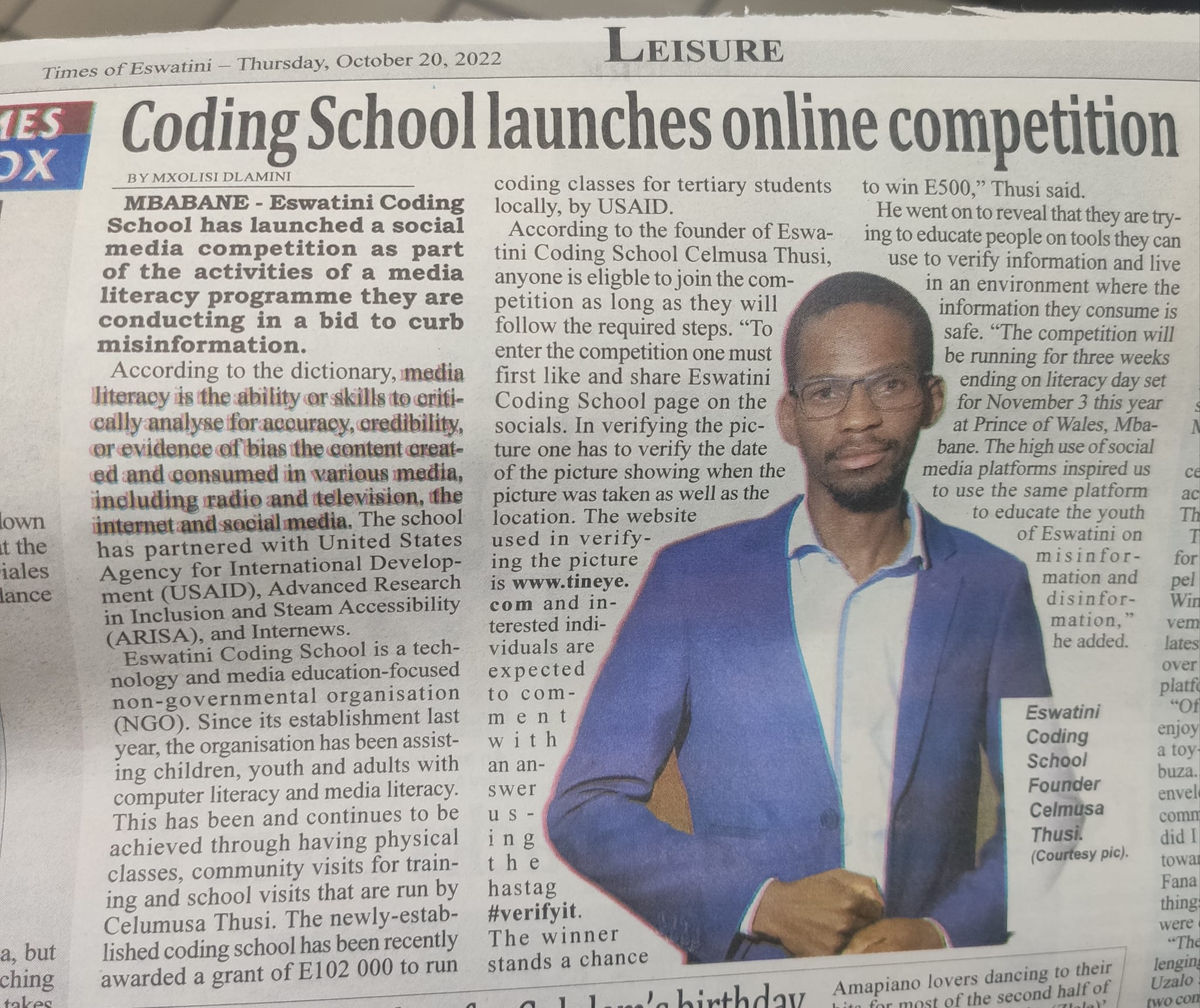
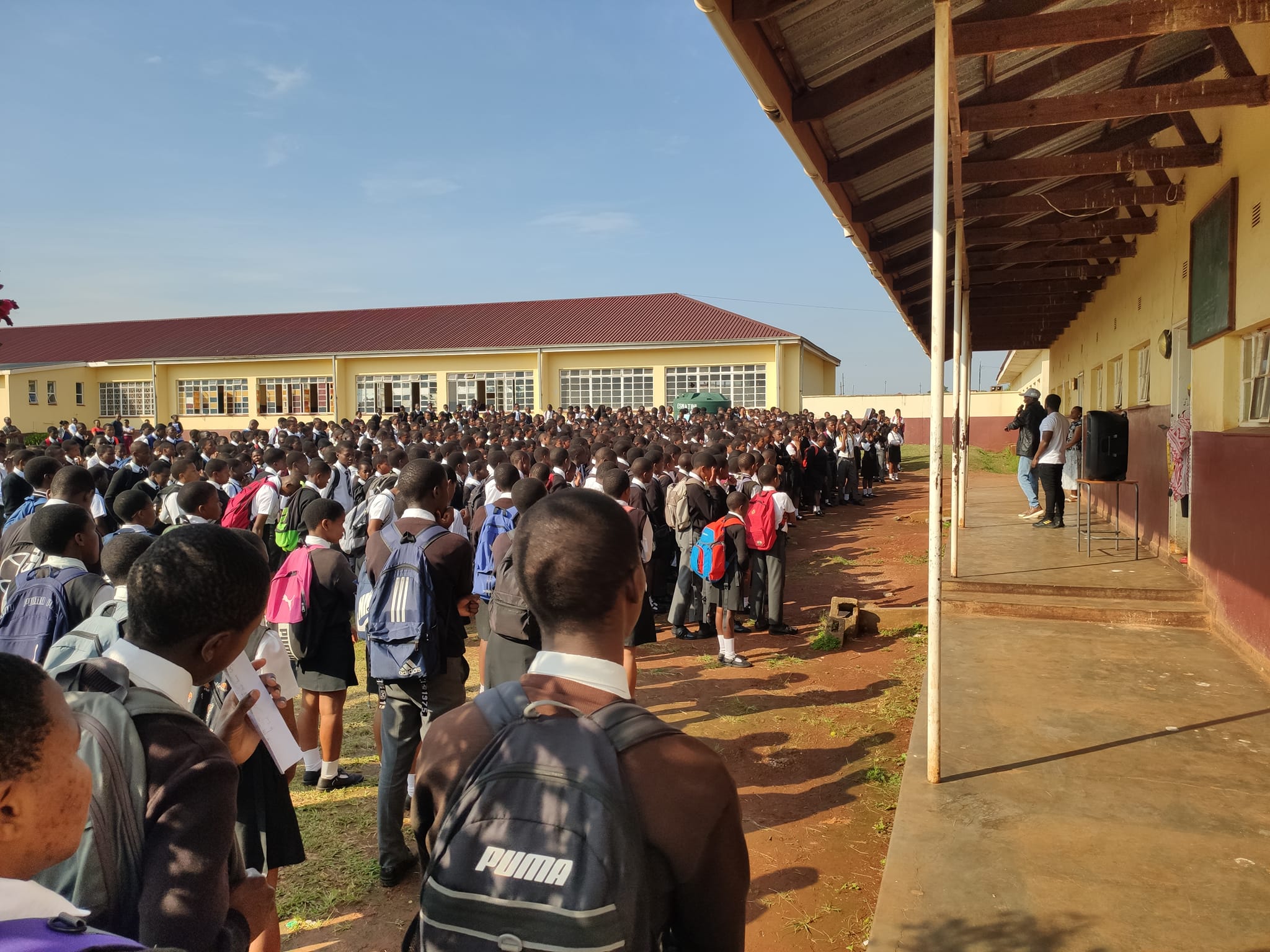
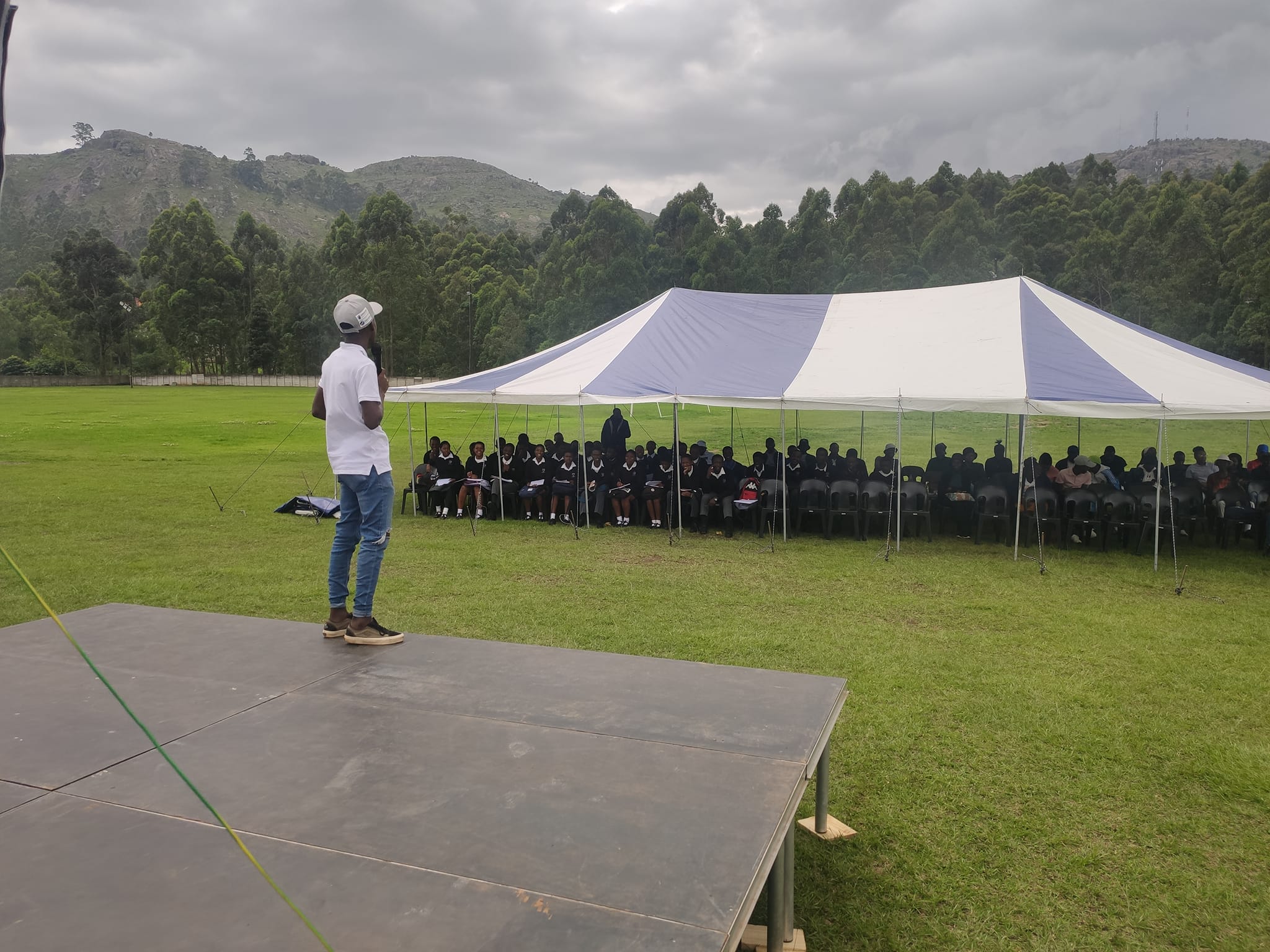
Programme stories and practical perspectives on coding, media literacy, digital hygiene, online safety and inclusive technology.
A practical guide to passwords, privacy, phishing awareness, digital footprints and safer everyday technology use.
Open, age-appropriate conversations can help children ask for support, recognise risk and make safer choices online.
Questions learners and communities can use to evaluate images, video, audio and claims in a changing information environment.